
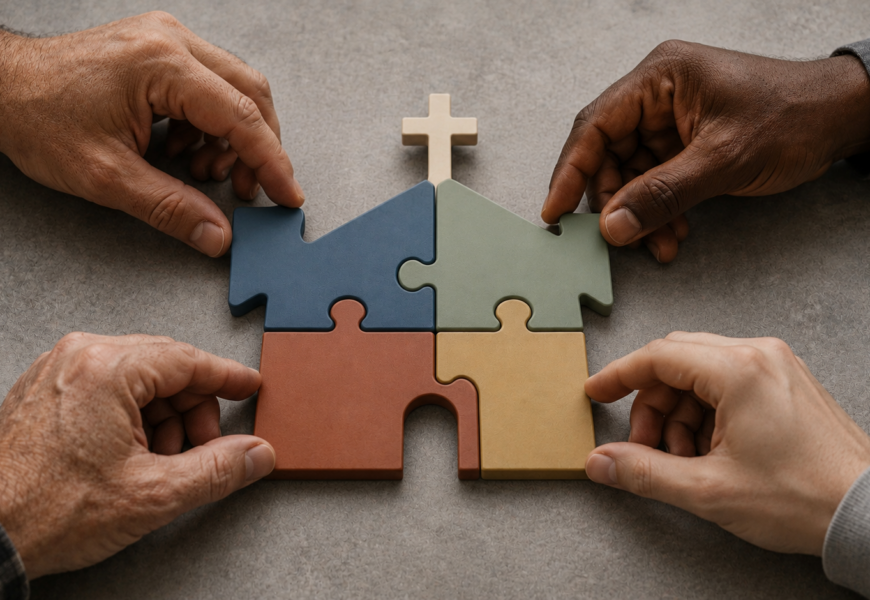
In church leadership, words carry weight. We often use terms like eldership and plurality as though they mean the same thing. They don’t. And understanding the difference can help explain why some elderships become brittle while others flourish.
Hardware & Software
Think of eldership as the hardware. Scripture calls for a team of qualified men—men marked by character, maturity, doctrinal discernment and spiritual depth—to govern God’s church. They are the governance structure, the framework God designed for shepherding His people.
But hardware alone doesn’t run. It needs an operating system. That’s where plurality gets installed. Plurality is the software. It’s not just about who sits at the table, but how they serve together as they share leadership. Plurality describes the culture elders create in the way they share leadership, resolve conflict, make decisions, and care for one another.
Here’s something every church leader must understand. Culture is always forming, whether we intend it or not. And that culture—healthy or toxic—will spill over into the church. A flourishing plurality becomes a living picture of what God intends for the entire body: a people marked by humility, unity, and gospel-shaped love.
The Plurality Surprise
Here’s what surprised me when I first stepped into eldership: plurality didn’t just shape the church—it shaped me. Serving with others meant my pride was tested, my ambition exposed, and my identity challenged. It forced me to face whether I feared man or trusted Christ, whether I led out of principle or defaulted to an unhealthy pragmatism.
In other words, plurality became an instrument of sanctification. It wasn’t about making decisions more efficiently; it was about making leaders more holy. Team ministry taught me that growth in Christ often comes through the friction of working alongside others. And in that friction, God was refining me.
Why This Matters
So why does this distinction matter? Because eldership without plurality breaks down. A single personality dominates. Division takes root. Leaders become brittle. Or they assume eldership is just about governing in meetings. But here’s what I learned: Elderships who understand plurality breathe life into each other and into the church they serve. Together, elders reflect the reality of Christ’s body—many members, different gifts, clear leadership, one Spirit.
The beauty of plurality is that it doesn’t simply hold the church together; it points the church upward. When elders walk in humility with one another, the congregation catches a glimpse of the gospel itself—God’s people united in love, shaped by grace, and living for His glory.
Today’s Tenacious Questions
Where have I confused “eldership” (the structure) with “plurality” (the culture), and how does that shape the way I think about leadership in the church? In what ways am I modeling a culture of humility, unity, and gospel-shaped love to others I serve alongside? How does plurality reflect the beauty of the gospel—that many members with different gifts are unified under one Spirit for the glory of God?
Prayer
Father, thank You for giving Your church the gift of elders and the beauty of shared leadership. Guard us from pride, division, or domination by a single voice. Shape in us a culture of humility, unity, and love that reflects the body of Christ. May our eldership not only govern well but also embody the gospel we preach. Help us to serve one another with honesty, courage, and joy, so that the church might flourish under Your care. In Jesus’ name, Amen.